In Beverly Hills, no kitchen remodels or pool grottoes as judge orders building moratorium over lack of affordable housing
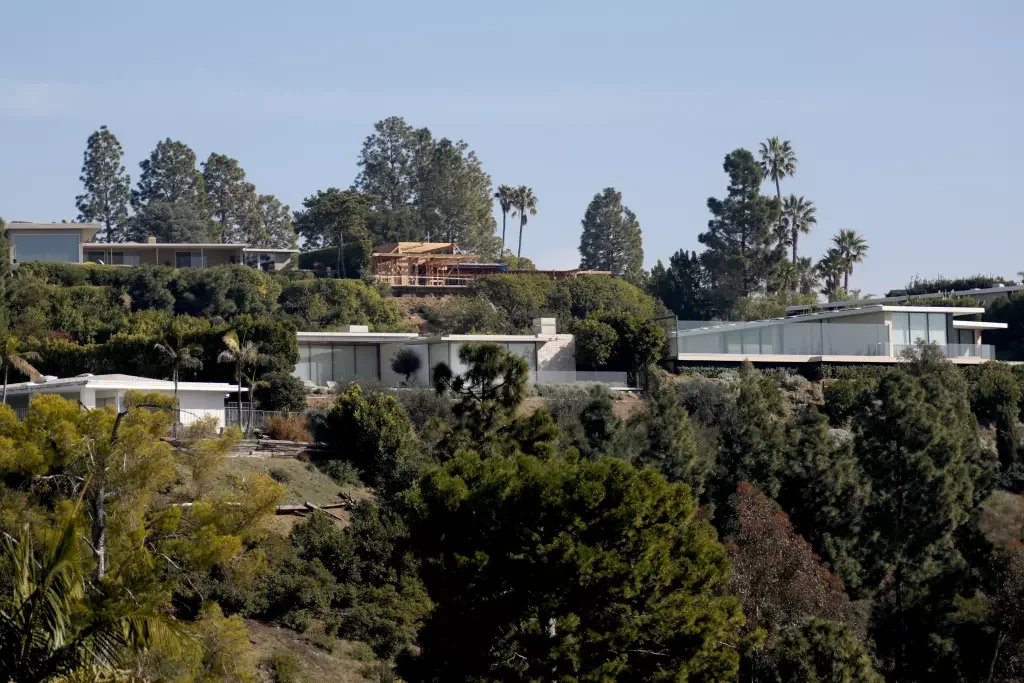
A judge has issued a moratorium on building permits in Beverly Hills.
(Gary Coronado/Los Angeles Times)
Projects that cross the transom of the Beverly Hills building department include the extravagant — pool grottoes and bowling alleys — as well as the more quotidian kitchen and living room upgrades.
In recent months, the city approved a $100,000 basement spa in the $125-million mega-mansion owned by WhatsApp co-founder Jan Koum, exterior upgrades for an $80,000-a-month rental and a $130,000 kitchen and bathroom remodel in a home purchased a week before for $6.7 million.
Now, any similar home improvements desired by Beverly Hills property owners are under threat.
Last month, Los Angeles County Superior Court Judge Curtis A. Kin blocked the city from issuing all building permits except for new residential development as a penalty for Beverly Hills’ failure to approve a sufficient blueprint for affordable housing.
Officials are appealing the decision and say they’re continuing to process permits as normal. But the potential ramifications on home and business owners and the construction industry have left civic leaders aghast.
“I’m shocked by the judgment,” said Murray Fischer, a real estate attorney who has practiced in Beverly Hills for 50 years. “It would mean that the city is at a standstill.”
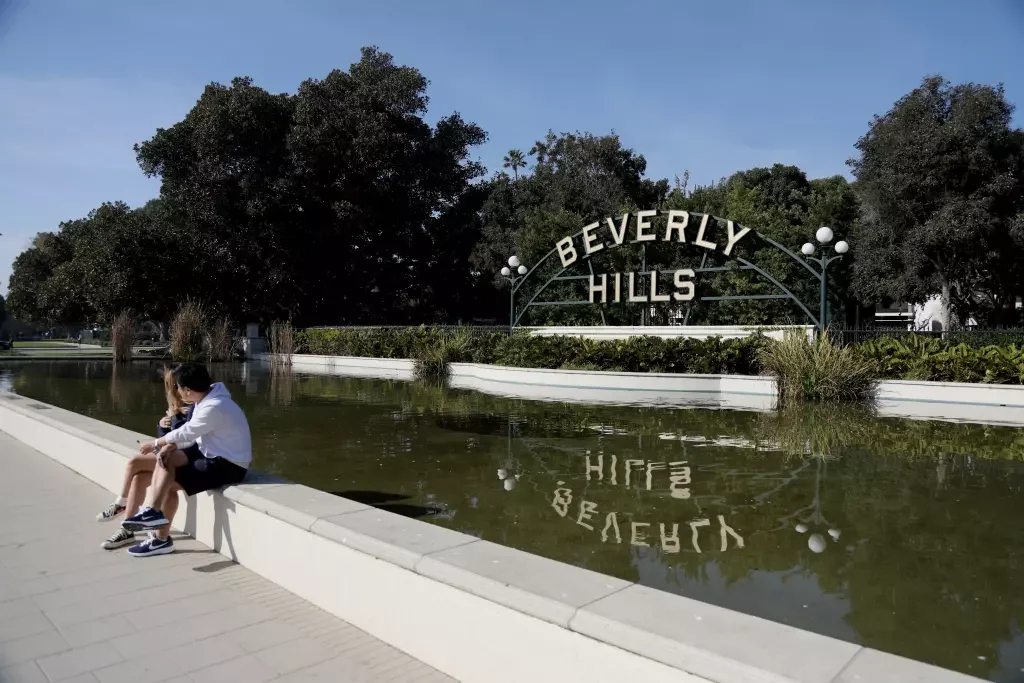
Beverly Gardens Park in Beverly Hills. (Gary Coronado/Los Angeles Times)
The permit moratorium would be among the most concrete consequences of California’s attempts in recent years to push cities to allow for new housing, including in wealthy communities that have long resisted it.
Few if any places are more famous for their luxury than Beverly Hills, where entrepreneurs and entertainers — such as Jeff Bezos, Leonardo DiCaprio and Taylor Swift — own mansions, opulent hotels attract well-heeled visitors, and glamorous boutiques make Rodeo Drive one of the most expensive shopping strips in the world.
Yet growth has been nonexistent. In 1970, the population of Beverly Hills was 33,400. Today, it is 32,400. Over the same period, the number of California residents has doubled to nearly 40 million.
Home and business owners in Beverly Hills frequently remodel their properties, but the makeup of the community — with single-family homes north of Santa Monica Boulevard and largely multifamily and commercial development south — has remained the same. Some residents argue the city’s fame and beauty result from efforts to preserve it as it is.
“We have intentionally created a desirable environment by deliberately avoiding overdevelopment and over-densification,” said Thomas White, chair of the Municipal League, a 60-year-old civic organization.
State officials previously had not challenged Beverly Hills despite a 50-year-old law that requires local governments to plan for a growing population and allow people of all incomes to live in every community.
Under the law, every eight years the state tells all cities how many new homes they need to accommodate. In the cycle before this one, Beverly Hills’ total was three, an amount so minuscule given the depths of California’s housing problems that it invited national attention.
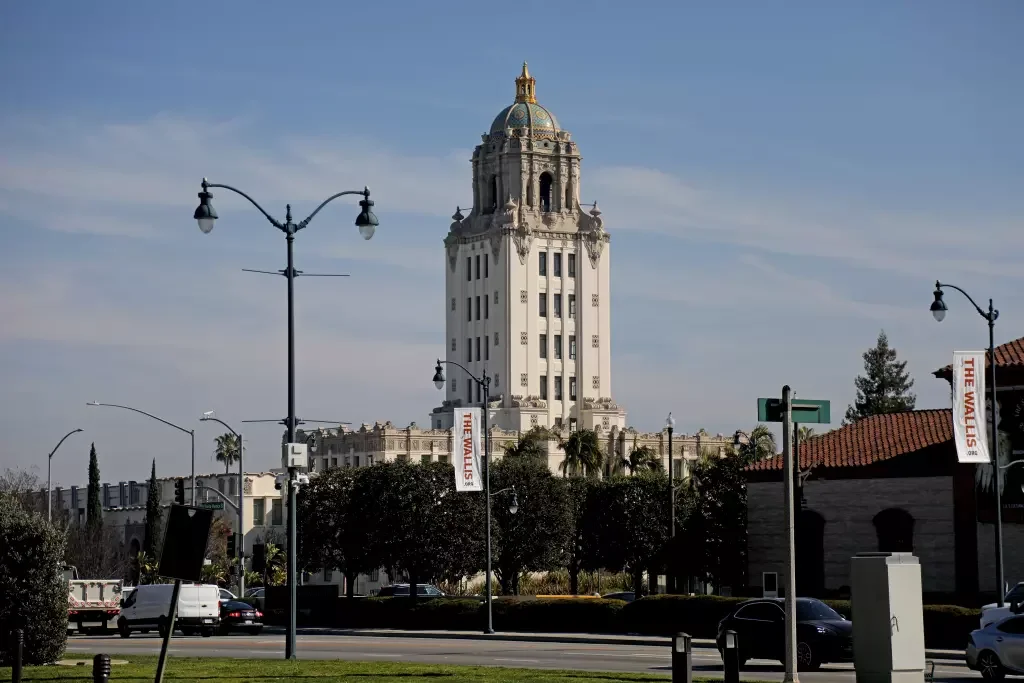
Beverly Hills City Hall. (Gary Coronado/Los Angeles Times)
In an effort to combat widespread housing unaffordability and reduce carbon emissions, state legislators in recent years have passed a series of laws aimed to encourage more development in cities near job centers and mass transit. No longer, they argued, should wealthy enclaves get a pass — citing the discriminatory effects of low-density zoning laws and research showing better economic and health outcomes for low-income families that can move to richer areas.
In the current period, Beverly Hills’ target under the housing planning law jumped to 3,104 homes, with three-quarters of them affordable to low- and middle-income residents.
By Liam Dillon | Staff Writer